
EPOXY FLOORING IN HOPKINSVILLE, KY
Tired of Stained, Worn or Unfinished Concrete?
Stained, dusty concrete makes a room look neglected. A suitable coating can transform how it looks and works.
Epoxy and polyaspartic coatings in Hopkinsville, KY for garage, basement, storefront and industrial concrete, each system picked for the slab’s present condition and the use it must withstand.
Talk through your project

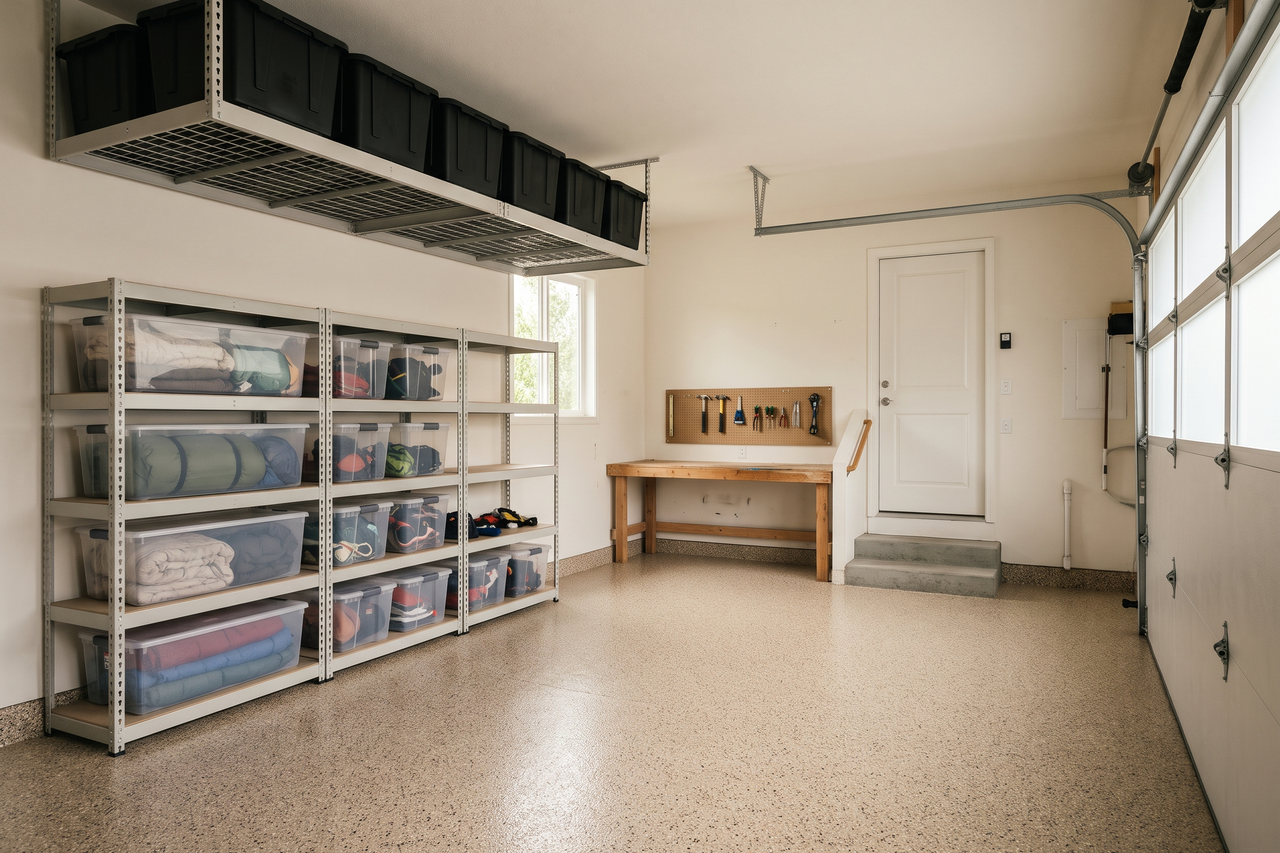
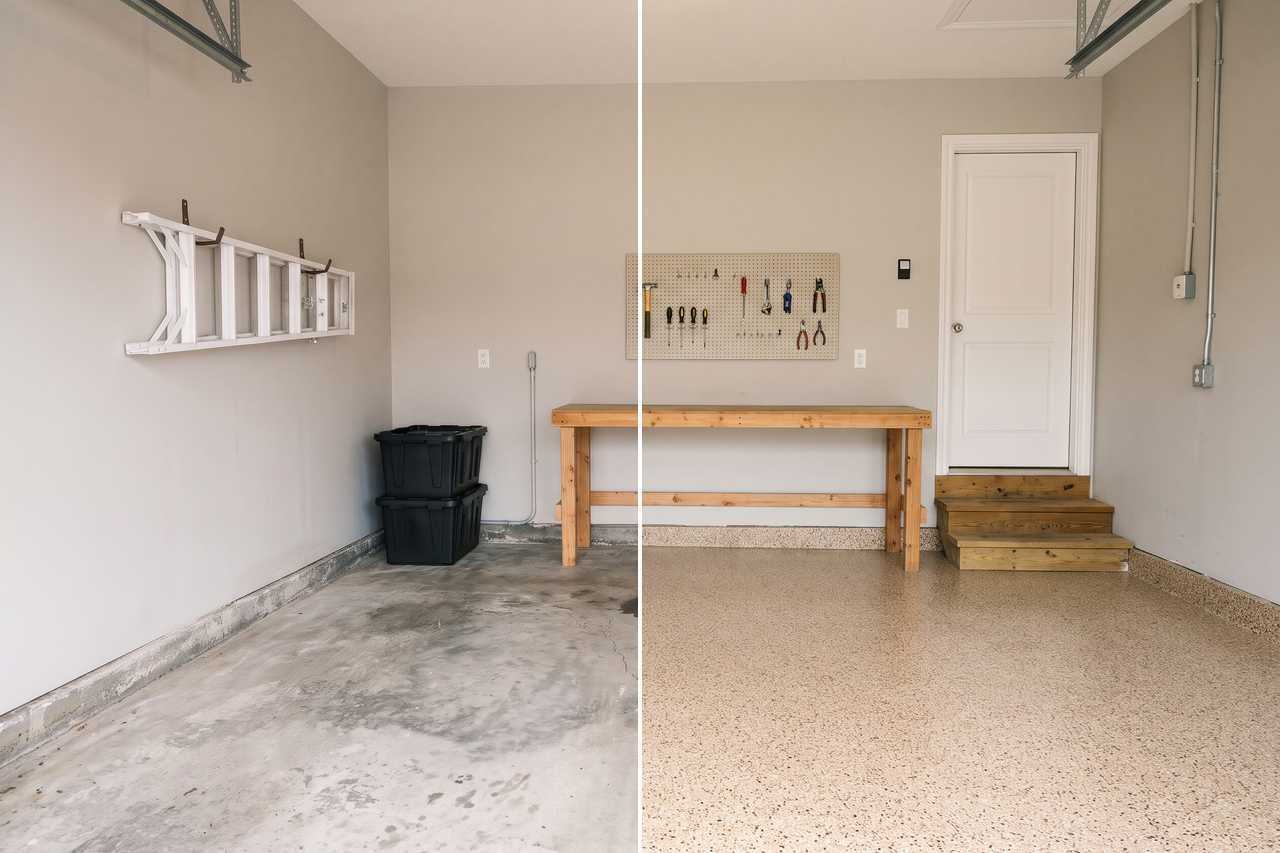
Your Concrete Shouldn't Make a Great Space Feel Unfinished
Leave concrete bare and it records everything. Drips from an engine turn into dark blotches, tread marks settle into the top layer, and doorway edges begin crumbling from foot traffic. Sweeping buys a moment of tidiness. Gradually, though, the floor becomes what visitors notice before anything else in the room, and not because it looks good.
Once you decide it’s time for a change, plenty of questions surface. Is your slab better suited to one coating or another? Does it need patching, grinding, or both before work starts? How does a careful installation differ from a sloppy one? Most owners have simply never had a reason to sort through any of that.
We explain the choices in plain terms, so taking that first step feels more certain. Your installer then studies the actual concrete up close, proposes a system that fits how the room gets used, and handles everything from surface prep to topcoat, with thorough preparation providing a better foundation for long-term performance.
The Right Floor for the Way You Use Your Space
Slabs arrive in all kinds of condition, and no two rooms put identical pressures on a floor. Any useful recommendation has to weigh the two together.

A Better Floor Is Easier Than You Think
With seasoned hands on the job, turning drab concrete into finished flooring tends to be less of an ordeal than people imagine.
01
Tell Us About Your Space
Paint us a picture of the floor today: its condition, what goes on in the room, and how you’d like the finished surface to look and feel.
02
Get the Right Plan
After inspecting the concrete, the flooring professional flags whatever repair or prep it calls for, then proposes a coating shaped by three things: how sound the slab is, what the room demands and what you want to spend.
03
Your Floor Gets Transformed
Once prep wraps up, your installer lays down the system picked specifically for that slab, tailored to the real punishment the space takes.
A Great Floor Starts With What You Don't See
Much of a coating’s eventual lifespan gets decided before anyone pries open a can. When a floor peels or lifts, the cause is rarely single: preparation is often part of the problem, alongside slab moisture, whichever product got selected and the installation conditions.
Readying a slab is really a handful of separate jobs. Diamond grinding roughens the concrete into a profile the coating can bite into. Where the floor’s condition or past points to it, moisture testing comes next. Pits, spalls and cracks are repaired before material goes down. Taken together, those steps create a better foundation for long-term performance.
Before choosing any coating, put preparation high on the list of things to ask about. See what shapes our approach to floors →

Make Your Space Feel Finished
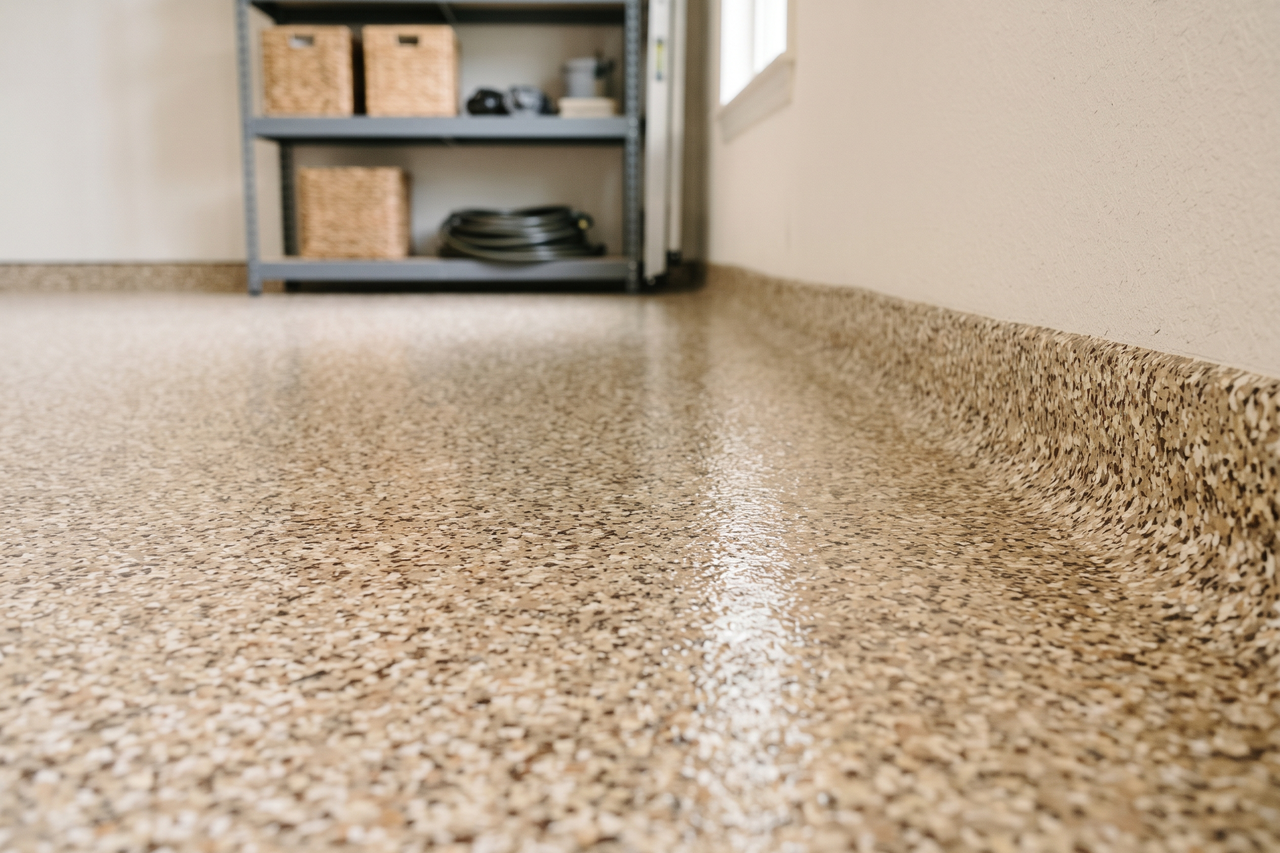
Pair a well-prepped slab with a suitable coating and the room changes in a way no single feature explains. Concrete that used to look chalky, absorb stains and chip at the corners turns into a solid, even surface with a crisp, purposeful finish raw concrete can’t deliver.
Messes stay up where a mop or towel reaches them rather than seeping down into the concrete. Floor care settles into an easy routine instead of a running battle. On top of that, the sealed surface throws light back into the space, so everything looks brighter.
Good flooring elevates its surroundings. Garages become workshops and hangout spots instead of mere parking, basements start to read as part of the home, and a well-kept commercial floor signals to customers that someone is minding the details.
Ready for a Floor You'll Be Proud Of?
Share where the floor stands now and where you’d like it to go to request a customized quote.
Frequently Asked Questions
What types of concrete floors usually make sense to coat?
Most coating work happens in garages, basements and commercial or industrial buildings. Whether one specific slab qualifies rests on its present condition, the system being weighed and how the room is put to use, so your installer confirms the fit in person once the concrete has been seen.
How do polyaspartic and epoxy coatings compare?
Cure speed, performance and price all set them apart. On cure speed specifically, a polyaspartic finish generally cures faster than many traditional epoxy systems, meaning planning can shift. Deciding between them depends on slab condition, surrounding environment and intended use, each of which the flooring professional checks on site.
Oil stains and a handful of cracks: is my floor still coatable?
Frequently, yes. Rather than disqualifying a floor, stains, hairline cracks and everyday wear are generally dealt with as part of prep. The core steps are grinding, moisture testing where it’s called for and repairing damage before coating, and what your particular slab needs comes into focus after your installer sees it.
After the form goes in, what's the next step?
What you submit gives the flooring professional an initial sense of your concrete and how the room functions. Building a customized estimate usually calls for an in-person visit to the floor, where the project is a fit.